What is a priority fee in blockchain?

When a transaction is made on a blockchain, it is typically sent to all the nodes on the network. The first node to validate the transaction and add it to the next block receives a small fee, known as a priority fee. This fee incentivizes nodes to validate transactions quickly, ensuring that the blockchain remains secure and efficient.

What is priority fee in blockchain?

Priority fee is a fee structure in the blockchain network that allows miners to prioritize transactions in their blockchains. Transactions with a higher priority are processed before those with a lower priority.

How does priority fee work in blockchain?

There is no one-size-fits-all answer to this question, as the priority fee mechanism used in blockchain varies depending on the specific blockchain platform or network. However, some common examples of how priority fees work in blockchain include:

-Paying higher fees for transactions that are confirmed sooner;

-Giving more weight to transactions that are confirmed by more nodes; and

-Allocating a higher priority to transactions from certain addresses or users.

What are the benefits of priority fee in blockchain?

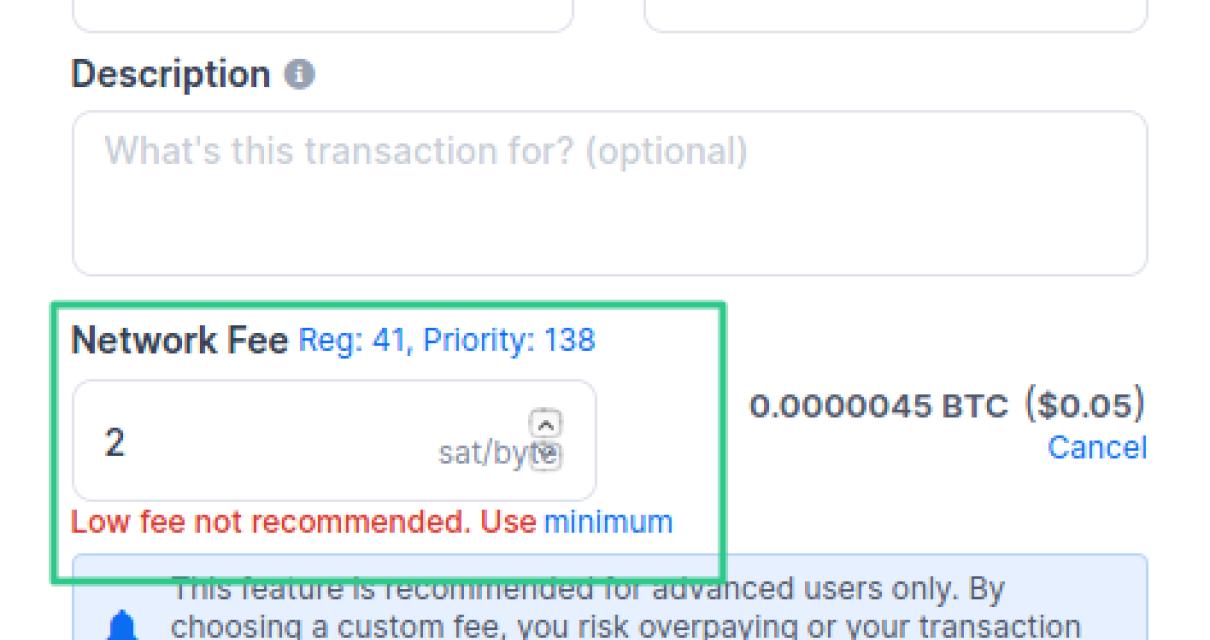
The priority fee is a fee that is paid to miners when they include a transaction in a block. The fee is intended to incentivize miners to include transactions in their blocks more quickly. Transactions that pay a higher priority fee will be more likely to be included in a block, while transactions that pay a lower priority fee will be less likely to be included in a block.
What are the drawbacks of prio

What are the drawbacks of priority fee in blockchain?

There are several drawbacks to using a priority fee in a blockchain system. First, it can create a two-tier system where some transactions are processed more quickly than others. This can lead to longer wait times for smaller transactions and can create a potential advantage for wealthier members of the community. Second, it can lead to congestion on the network as more transactions are processed in a given time frame. This can slow down the overall speed of the network and make it harder for people to conduct transactions. Finally, priority fees can create a barrier to entry for new participants, as they will likely have to pay higher fees to participate in the system.

Why is priority fee important in blockchain?

The priority fee is important in blockchain because it incentivizes nodes to continue to maintain the blockchain. The higher the priority fee, the more nodes will be willing to keep the blockchain up and running.

How can priority fee be used in blockchain?

A priority fee is a fee that is paid in order to have a transaction processed before other transactions on the blockchain. This is done using a process called "mining." Miners are rewarded with cryptocurrency for verifying and committing transactions to the blockchain. Transactions with a higher priority are processed before those with a lower priority.

What is the future of priority

What is the future of priority fee in blockchain?

There is no definitive answer to this question as the future of priority fee in blockchain remains largely up for debate. Some argue that it could eventually be replaced by a more efficient and transparent system, while others believe that it could still have a significant role to play in the future of blockchain. Ultimately, it will likely be down to the discretion of individual blockchain platforms as to whether or not they adopt a priority fee system, and it is likely that there will be a variety of different implementations across different platforms.
How has priority fee impacted

How has priority fee impacted blockchain?

Priority fee is a way for miners to compensate miners who have been mining on the blockchain for a longer time. It is calculated as a percentage of the transaction size and is paid to the miner who solves the block first. This creates an incentive for miners to continue mining on the blockchain, as they will receive a higher priority fee for their blocks.

What are the challenges with implementing priority fee in blockchain?

The challenge with implementing a priority fee in a blockchain system is that it can be difficult to determine who should be charged the fee and how much they should be charged. Additionally, it can be difficult to enforce the fee structure.

Can priority fee be used outside of blockchain?

No. Priority fee is not meant to be used outside of the blockchain. The priority fee is a utility that will be used to incentivize miners to include transactions in their blocks.

What other applications are there for priority fee in blockchain?

There are a variety of other applications for priority fee in blockchain. For example, priority fee could be used to manage the order of transactions in a blockchain network. Priority fee could also be used to ensure that a certain transaction is processed before other transactions in a blockchain network.

Read more

What is the blockchain bitcoin?
Bitcoin is a digital asset and a payment system invented by Satoshi Nakamoto. Transactions are verified by network nodes through cryptography and recorded in a public dispersed ledger called a blockchain. Bitcoin is unique in that there are a finite number of them: 21 million. Bitcoins are created as a reward for a process known as mining. They can be exchanged for other currencies, products, and services. As of February 2015, over 100,000 merchants and vendors accepted bitcoin as payment.
What is the name of the bitcoin blockchain?
The bitcoin blockchain is a distributed database that contains a record of all Bitcoin transactions. It is constantly growing as "completed" blocks are added to it with a new set of recordings. Each block contains a cryptographic hash of the previous block, a timestamp, and transaction data. Bitcoin nodes use the block chain to differentiate legitimate Bitcoin transactions from attempts to re-spend coins that have already been spent elsewhere.
What is blockchain verification?
A blockchain is a digital ledger of all cryptocurrency transactions. It is constantly growing as "completed" blocks are added to it with a new set of recordings. Each block contains a cryptographic hash of the previous block, a timestamp, and transaction data. Bitcoin nodes use the block chain to differentiate legitimate Bitcoin transactions from attempts to re-spend coins that have already been spent elsewhere.
What is a graph blockchain?
A graph blockchain is a type of distributed ledger that uses a directed graph data structure to store transaction data. Graphs are a powerful data structure that can be used to model many real-world objects and problems. The use of a graph data structure allows for more efficient and scalable transactions than traditional blockchains.
What is the best blockchain for smart contracts and why?
There is no definitive answer to this question as it depends on individual needs and preferences. Some popular blockchains for smart contracts include Ethereum, EOS, and NEO. Each blockchain has its own unique features and benefits, so it is important to do your own research to figure out which one would be the best fit for you.
What is blockchain and mining?
A blockchain is a digital ledger of all cryptocurrency transactions. It is constantly growing as "completed" blocks are added to it with a new set of recordings. Each block contains a cryptographic hash of the previous block, a timestamp, and transaction data. Bitcoin nodes use the block chain to differentiate legitimate Bitcoin transactions from attempts to re-spend coins that have already been spent elsewhere. Mining is how new Bitcoin and other cryptocurrency are created. Miners are rewarded with cryptocurrency for verifying and committing transactions to the blockchain. Ethereum miners are rewarded based on their share of work done, rather than their share of the total number of blocks mined.
What are the benefits of a multi-party system blockchain?
In a multi-party system blockchain, multiple parties can access the blockchain and each party has its own node. This allows for increased security and transparency as each party can verify the transactions on the blockchain. Additionally, a multi-party system blockchain can help to reduce the risk of fraud as each party can monitor the activities on the blockchain.
What is the blockchain on YouTube?
The blockchain is a digital ledger that records all cryptocurrency transactions. It is constantly growing as "completed" blocks are added to it with a new set of recordings. Each block contains a cryptographic hash of the previous block, a timestamp, and transaction data. Bitcoin nodes use the block chain to differentiate legitimate Bitcoin transactions from attempts to re-spend coins that have already been spent elsewhere.
What is in a blockchain block?
A blockchain block is a digital record of transaction data. It is composed of three parts: the header, the body, and the footer. The header contains information such as the block height and timestamp. The body contains the transaction data. The footer contains the cryptographic hash of the previous block's header.